The queries your competitors can't see
Long-tail keywords are where small sites win. What they are, how to find them without paying for a suite, and how to mine the question queries Google hands you for free.
What are long-tail keywords?
Long-tail keywords are longer, more specific search queries, usually three or more words, that individually get fewer searches but collectively make up most of Google's traffic. "Keyword research" is a head term; "how to do keyword research for a local restaurant" is long-tail. They bring lower volume, much lower competition, and clearer intent.
Long-tail vs short-tail keywords: why the tail converts
A short-tail query is an audience; a long-tail query is a person with a problem. Someone searching "crm" is browsing. Someone searching "crm for solo real estate agents under $20" is buying. The tail trades volume for intent, and intent is what converts.
Long-tail keyword examples
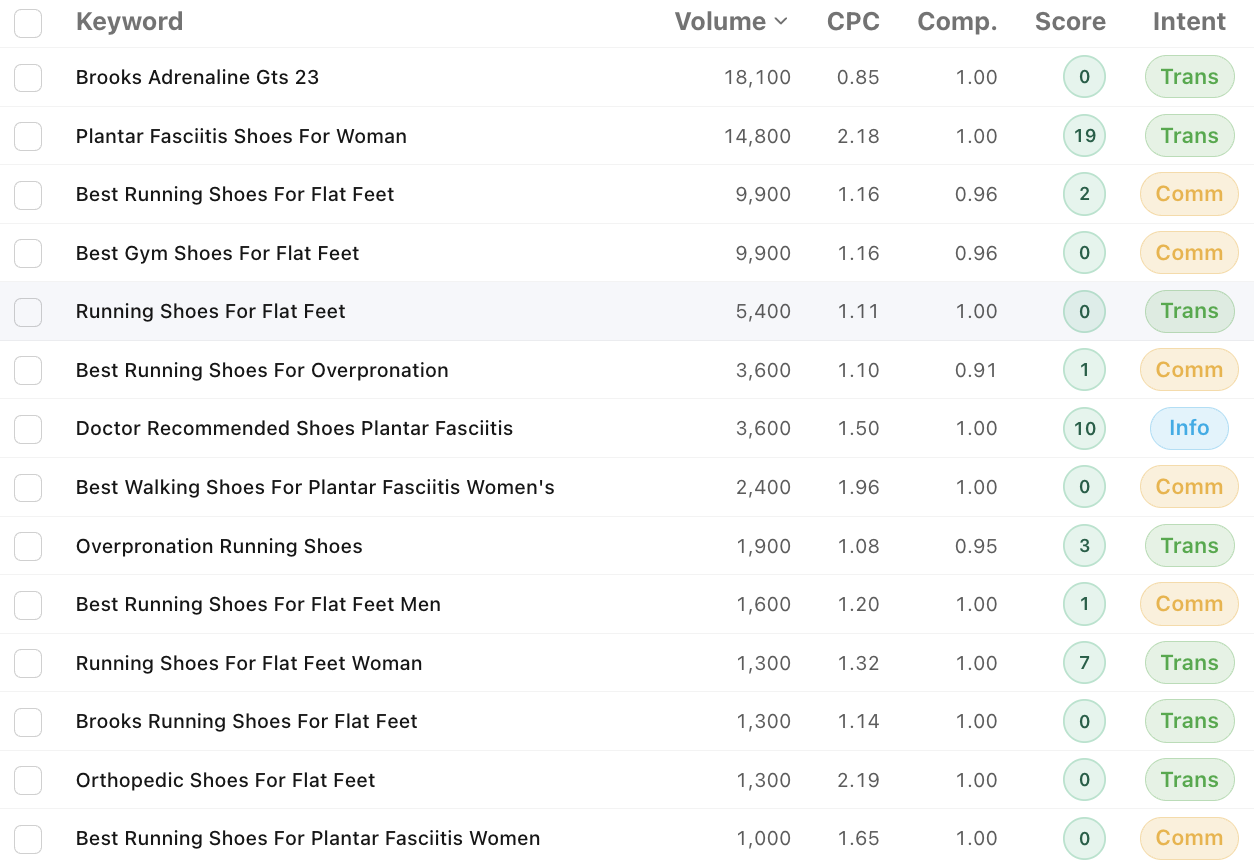
- Head: running shoes → Tail: best running shoes for flat feet and plantar fasciitis
- Head: keyword research → Tail: how to do keyword research without a paid tool
- Head: email marketing → Tail: email marketing laws for cold outreach in canada
How to find long-tail keywords (3 free methods)
- Mine People Also Ask + autocomplete fan-out. Type your head term, harvest every PAA question, then re-search each question and harvest again. Two levels deep gives you 30–50 real questions people ask.
- Pull your own Search Console queries. Your GSC data is a long-tail generator that no tool can match. Filter queries with impressions but no clicks: those are tails you already half-rank for. The full strategy for working that data in bulk is programmatic discovery with Search Console.
- Expand seeds in OpenSEO. Feed your seed list into keyword research and keep the specific, question-form results with clear intent regardless of volume. "0 volume" queries are measured, not dead.
Run this workflow with the OpenSEO MCP:
Using the OpenSEO MCP: research keywords for the seed "[your topic]",
then return only queries with 4+ words or question form (how/what/why).
Group them by intent and suggest one page per group.
Long-tail keyword FAQ
What are long-tail keywords in SEO?
Specific multi-word queries with lower individual volume but higher combined traffic and clearer intent than head terms. They're the fastest way for a newer site to rank, because competition concentrates on head terms.
How do I use long-tail keywords in content?
One intent per page. Make the long-tail query the H2 (or H1) verbatim where natural, answer it in the first paragraph, then earn depth below. Don't scatter twenty tails across one page; cluster related tails, then split by intent.
Is there a free long-tail keyword generator?
Google gives you two: autocomplete and People Also Ask. Your Search Console is the third and best; it's your site's actual tail. OpenSEO connects your Search Console and expands what you find into full keyword lists. You can start for free; paid plans start at $10/month.
Run this strategy in OpenSEO
Run the MCP prompt in this guide with OpenSEO. OpenSEO is open source, free to try, and does not require a credit card.
