The backlink audit: sort by first seen, then by relevance
The three newest links to a real site were from a casino domain and two link sellers, with spam scores of 45 to 70. Underneath them were the links that count. How to tell the two apart in an hour, and why relevance beats every third-party score.
What is a backlink audit for?
Two things, and they pull in different directions. The first is to find out which links are doing anything for the site, so you can get more like them. The second is to find out whether anything pointed at the site is a liability. Use the audit to identify links worth reading and target pages worth repairing.
Here is what the newest links to seoarcade.com, a small SEO consultancy site, looked like on the day this was written, sorted by the date they were first seen:
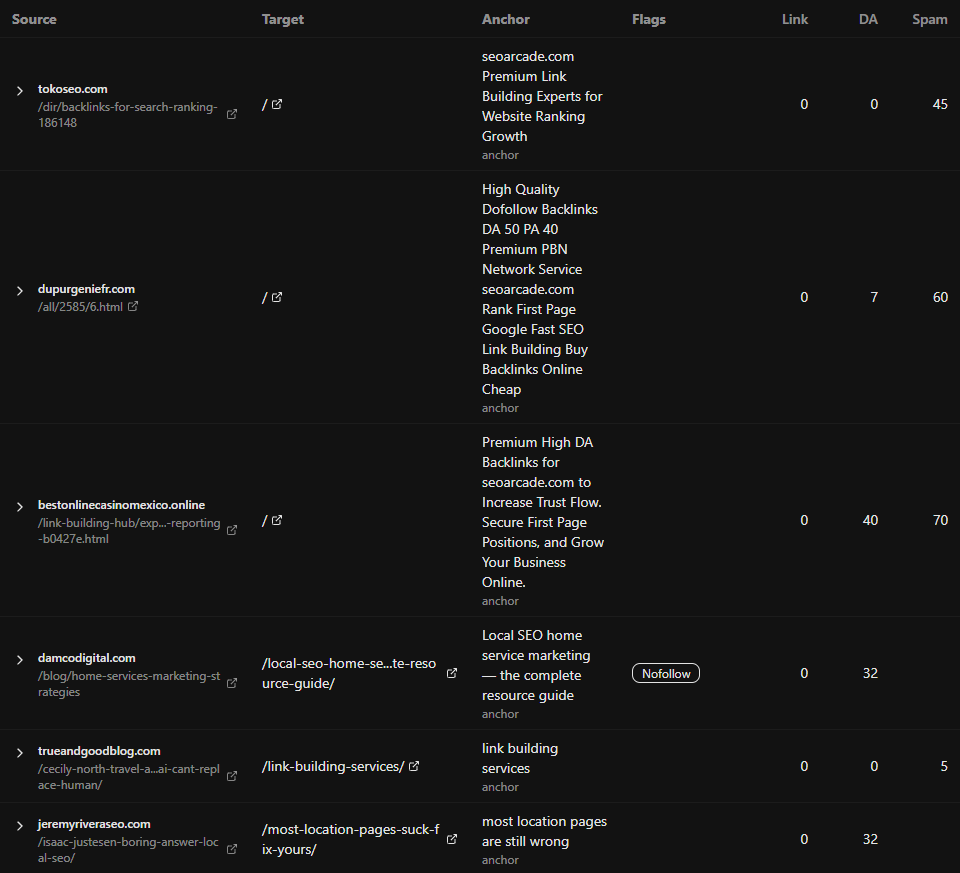
The three newest are from a link seller, a "premium PBN network service" and a casino domain, with spam scores of 45, 60 and 70 and anchor text that is an advert for buying links. Nobody at the site asked for them. The three below are a marketing blog citing a resource guide, a related site linking a services page, and a podcast recap. Spam scores 0 to 5, anchor text that describes the page.
That is the whole audit in six rows. The junk arrives on its own and announces itself. The links that matter look like someone chose to make them.
The score is not the audit
Every backlink tool carries an authority number for the linking domain. OpenSEO shows DataForSEO's domain rank alongside a spam score. They are useful for sorting. They are not the verdict.
Bradley Benner, who builds links for a living and tests what works on his own sites, is blunt about what he learned:
it's not some stupid third party metric like DA or DR or trust flow or anything else that matters about whether a link is valuable or not. What matters is whether it's relevant.
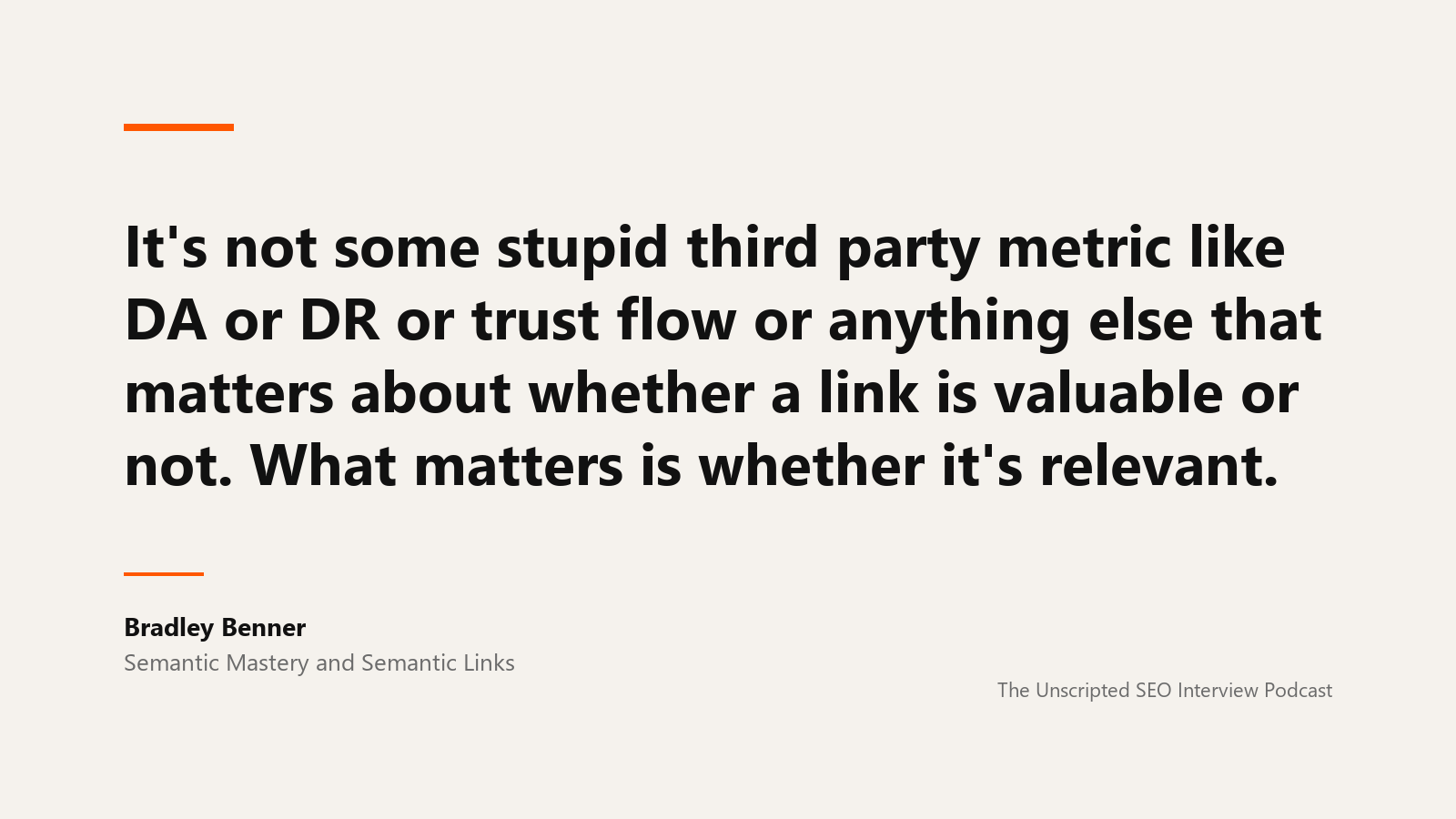
His episode on relevance over DR is on the Unscripted SEO podcast. The point holds in the table above: the casino domain has a domain rank of 40, higher than every legitimate link visible beneath it. Sort by rank and the worst link on the page floats to the top.
So the audit has two passes. The first uses the scores to sort. The second reads the rows.
Pass one: sort and bucket
Start with one page of the profile, using one row per referring domain. Turn off the spam filter so you can see the rows you are sorting. Then make four buckets.
Obvious junk. Spam score above 30, or anchor text that is an advert, or a source domain whose name has nothing to do with anything. On the profile above, that bucket was three of the newest six and a long tail of /all/2585/6.html-shaped URLs on throwaway domains. You will recognise the pattern after ten rows.
Broken targets. The overview for the site above reported 17 broken backlinks and 47 broken pages. Open the target URLs to check what is wrong. Restore a missing page or redirect it to a relevant replacement where one exists. This profile request returns live backlinks, so it is not a list of lost links.
Nofollow and syndication. Podcast directories, aggregators, social profiles. Real, harmless, and not what you build a strategy on. Count them so they do not inflate the total in your head.
Everything else. This is the bucket you audit properly.
Pass two: read the links that might matter
For each row in the last bucket, the question is not "how strong is this domain" but "would a person on that page have a reason to click through." Jeremy Moser, who runs a link building agency, describes what his team looks for before the anchor text even comes up: whether the linking site is a real business with real traffic, and whether the page is about the same thing yours is. His words on where local businesses get the most from links:
The typical plays that we see working well for local is definitely more local publication.
His episode is here. A link from a town newspaper to a plumber is worth more than a link from a DR 70 marketing blog to the same plumber, and no score will tell you that. The row will, if you open it.
Read the anchor and the surrounding text. Read what the linking page is about. Note whether your link is the only outbound link or one of two hundred. Twenty rows takes twenty minutes and tells you more than any composite.
Run this with the OpenSEO MCP
Connect the OpenSEO MCP. The overview costs about 50 credits for a domain and each page of 100 backlink rows about 30, so a full audit of a small site is a few hundred credits. The link-prospecting skill packages the outreach side of this.
Using the OpenSEO MCP on project [name], audit the backlinks for
[domain]:

1. Call get_backlinks_overview with scope "domain". Report backlinks,
   referring domains, rank, spam score, broken backlinks and broken
   pages.

2. Call get_backlinks_profile with scope "domain", mode
   one_per_domain, hideSpam false, sorted by firstSeen descending,
   page 1, 100 rows. Bucket every row for review: suspected junk
   (spam score over 30 or advert-style anchor text), broken targets,
   nofollow, or worth reading. Scores are sorting aids, not verdicts.

3. For the "worth reading" bucket, list source domain, source page
   title, anchor text and target page. Flag any target page that
   returns an error.

4. Start a new get_backlinks_profile request with scope "domain",
   mode as_is, page 1, 100 rows, filters maxSpamScore 10 and
   minDomainRank 20. In this sample, list domains linking to more
   than one distinct target page. Say that other links may be absent
   from the sample.

5. Give me two lists: broken target pages to investigate for repair
   or a relevant redirect, and ten linking pages to read in full.
Step 3 is the one that matters and the one an agent cannot finish for you. It can list the rows. Reading them is the audit.
The audit is a reading exercise
A backlink profile is a list of decisions other people made about your site. The scores help you sort the list. They do not tell you what anyone decided or why. An hour with the rows does, and it ends with two things you can act on this week: the broken pages to investigate, and a short list of sites that already chose to link to you, which is where more links usually come from.
Backlink audit FAQ
How do I do a backlink audit?
Start with a page of backlink rows, one per referring domain, sorted by first seen, with spam filtering off. Sort them into suspected junk, broken targets, nofollow, and worth reading. Check broken pages before restoring them or choosing a relevant redirect. Read the remaining rows and decide whether a person on the source page would have a reason to click through.
What is a toxic backlink?
A link from a page that exists only to sell or host links: link seller listings, PBN adverts, casino and pharmacy domains, and pages with hundreds of unrelated outbound links. They tend to have high spam scores and anchor text that reads like an advert. Google generally ignores them.
Is domain rank or DA a good measure of a backlink?
It is a sorting aid, not a verdict. A spam domain can carry a higher rank than a relevant small site. Use the score to order the list, then judge each link on whether the linking page is about the same thing as yours and whether a real site published it.
Does OpenSEO show broken backlinks?
The overview reports broken backlinks and broken target pages. Profile rows include broken status, dofollow or nofollow, domain rank, spam score and first-seen date. The profile request used here returns live backlinks, so it cannot list lost links. The free backlink checker shows the summary and top 15 links without an account.
Run this strategy in OpenSEO
Run the MCP prompt in this guide with OpenSEO. OpenSEO is open source, free to try, and does not require a credit card.